WHATSAPP: +86 13544137314
ELUFA MFG
Precision Parts Manufacturing in Shenzhen, Guangdong, China
How to Review a Mixed-Process RFQ Before Release
A practical guide to comparing CNC machining, sheet metal fabrication, cold heading, custom fasteners, and metal injection molding before one assembly is quoted.
BLOG ARTICLE · PROCESS REVIEW
Why this RFQ matters
A practical guide to comparing process fit, quantity, finish, and validation when one assembly needs multiple manufacturing routes.
Related service: Services Overview
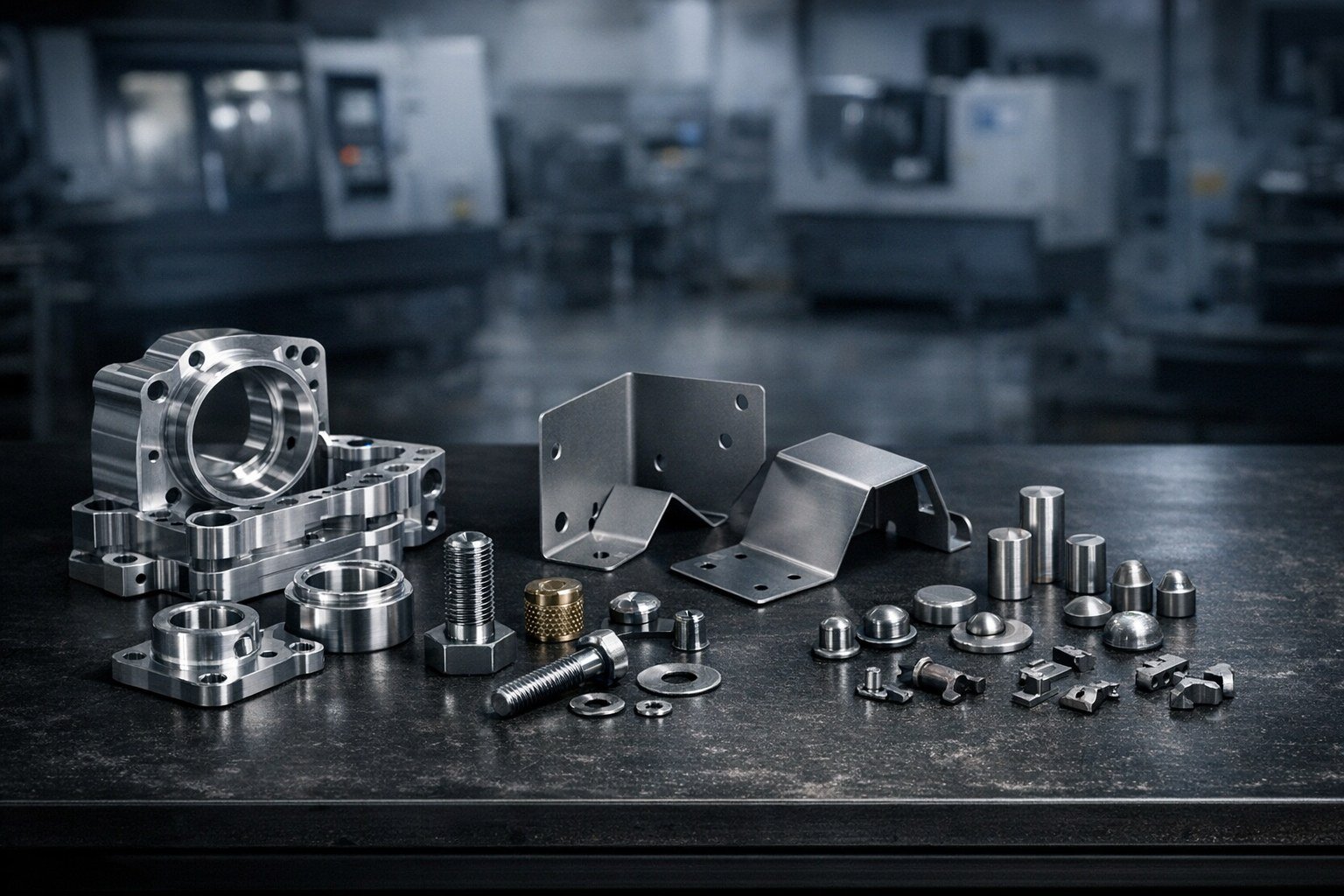
A mixed-process RFQ is different from a single-part, single-process quote request. One assembly may include machined brackets, formed panels, headed hardware, special fasteners, and small molded metal features that each want a different production route.
If the package does not explain how the pieces work together, the supplier may quote each part in a vacuum. That creates avoidable gaps around finishing, inspection, lead time, and who should own the final handoff.
What to include in a mixed-process RFQ
The goal is to give the supplier enough context to compare process fit instead of guessing which part should be machined, formed, headed, or molded.
- Current assembly drawing and the revision level for each part
- 3D model for the assembly if fit, stack-up, or clearance matters
- Prototype, pilot, and production quantity split for the full program
- Which parts are critical to function, appearance, or serviceability
- Finish, coating, passivation, and packaging expectations by component
- Target lead time, sample timing, and any launch milestone that matters
- Any acceptable process alternates if the design is still flexible
- Contact information for technical follow-up before quoting closes
How to compare the right route before release
A mixed-process RFQ should help the buyer and supplier compare the most practical route for each part while keeping the assembly plan aligned.
Part geometry and feature density
Use CNC machining when geometry, tight tolerance, or fast design iteration drives the risk. Use sheet metal fabrication for brackets, panels, covers, and formed enclosures. Use cold heading for stable-volume formed hardware. Use custom fasteners when the assembly needs application-specific thread, head, or drive behavior. Use MIM when the part is small, complex, and the volume can support tooling-based economics.
Volume and release timing
Prototype, pilot, and production volumes often push different parts toward different routes. The RFQ should show where the quantity curve is heading, not only the first order.
Secondary operations and finish control
Finish, coating, passivation, threading, machining after forming, and packaging all change the real quote. If the final assembly needs a visible finish or a protected mating surface, that should be stated before release.
Process pages: CNC Machining, Sheet Metal Fabrication, Cold Heading, Custom Fasteners, Metal Injection Molding
How to compare the right route before release
A clean RFQ does not force every component into one process. It helps the buyer and supplier compare the most practical route for each part while keeping the assembly plan aligned.
- Use CNC machining when geometry, tight tolerance, or fast design iteration drives the risk.
- Use sheet metal fabrication when the component is a bracket, panel, cover, or formed enclosure.
- Use cold heading when the part is a stable-volume formed hardware item that justifies tooling.
- Use custom fasteners when the assembly needs application-specific thread, head, or drive behavior.
- Use MIM when the part is small, complex, and the volume can support tooling-based economics.
Explore the Services Overview service
If you are comparing manufacturing routes, this service page shows the production scope, typical part types, and practical limitations behind services overview.
Common RFQ mistakes that slow down multi-process quoting
- Sending isolated part files without the assembly drawing or stack-up context
- Leaving finish and inspection ownership unclear between different part families
- Forgetting to split prototype and production quantities by release stage
- Assuming the cheapest process is the best choice for every component
- Skipping the question of which parts can still change before tooling or samples start
Checklist before you send the RFQ
- Assembly drawing, part drawings, and revision levels are all current
- Critical functional features are identified by component
- Quantity and launch timing are clear for the whole program
- Finish, packaging, and inspection responsibilities are defined
- Process alternates are allowed or intentionally locked down
- A technical contact is available for clarification before release
FAQ
When should one RFQ cover multiple processes?
When the parts are part of one assembly and the manufacturing route should be compared as a system instead of as isolated line items.
Should every part be forced into the same process family?
No. A mixed-process RFQ is stronger when each component is matched to the route that best fits its geometry, volume, and inspection needs.
Why does volume matter so much in a mixed package?
Because prototype, pilot, and production volumes can push different parts toward different routes, tooling choices, or finish plans.
Need Help Comparing Process Fit?
ELUFA MFG can review your drawing package, compare the available manufacturing routes, and help you turn a mixed-process RFQ into a clearer release plan.
ELUFA MFG
Shenzhen, Guangdong, China
Email: victor@elufamfg.com
Business Hours: Monday to Saturday, UTC+8
Manufacturing Services
Quick Links
Home
Contact / RFQ
Prototype + Production Support
Engineering DFM Review
Quality Documentation on Request
© ELUFA MFG. All rights reserved.