WHATSAPP: +86 13544137314
ELUFA MFG
Precision Parts Manufacturing in Shenzhen, Guangdong, China
A practical guide to the size, geometry, tolerance, material, and post-processing decisions that shape a successful MIM program.

BLOG ARTICLE · METAL INJECTION MOLDING
Use this guide to design small MIM parts with more realistic tolerance, shrinkage, and post-processing assumptions before tooling starts.
Related service: Metal Injection Molding

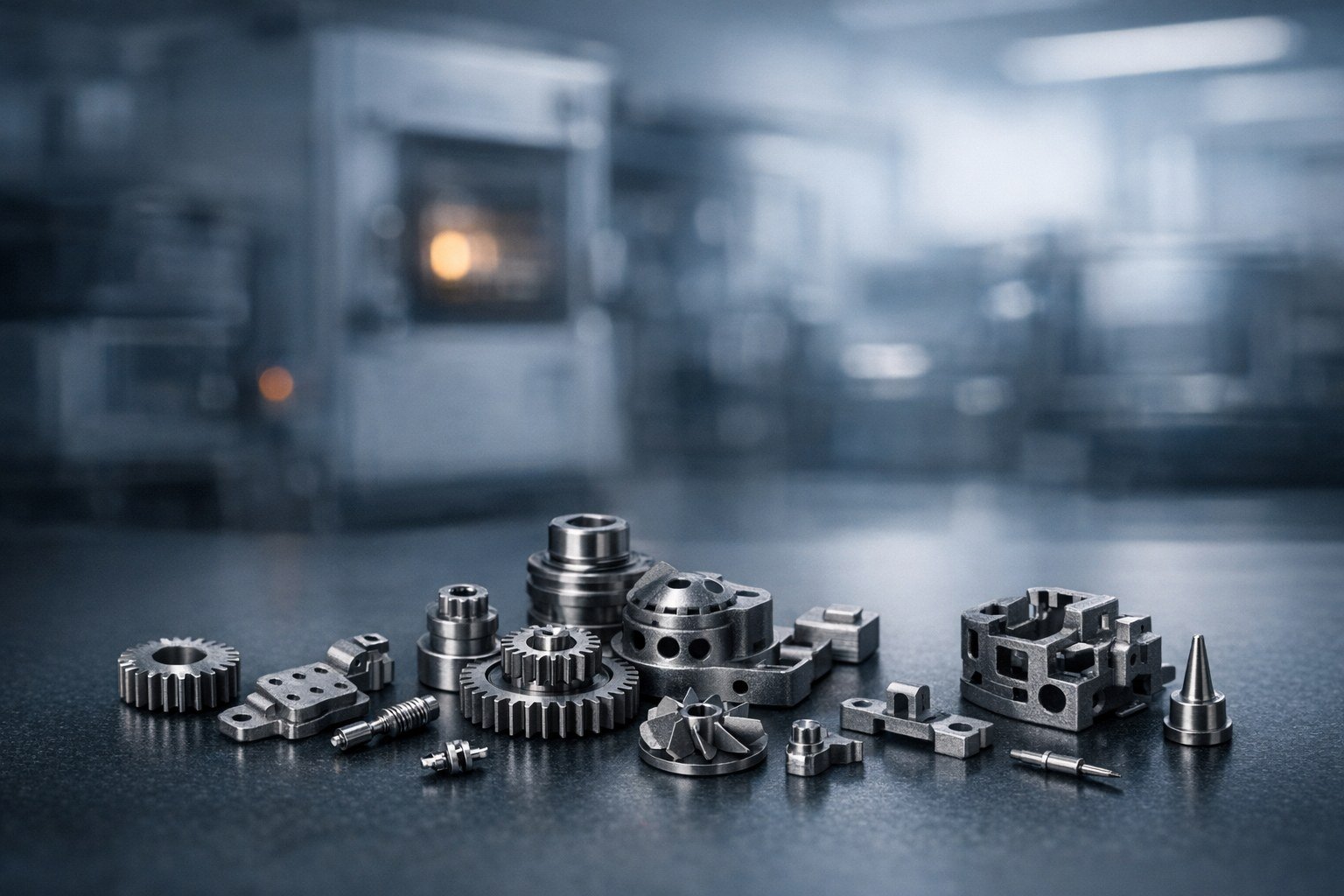
Metal injection molding is a strong fit for small, complex parts that need repeatability after tooling is approved. The process can produce detailed geometry, but it is not forgiving when the part size, wall thickness, or tolerance targets are unrealistic.
A good MIM RFQ explains the final function of the part, how shrinkage will be managed, and whether the part needs post-sinter machining or finishing. Without those details, the supplier may have to guess on the tool route, which is exactly what slows down launch.
The RFQ should give the supplier enough information to judge fit, shrinkage, tooling investment, and post-processing before quote release.
MIM needs a tool route that accounts for sintering behavior. Wall thickness, mass distribution, and post-sinter machining all influence the cost and the dimensional plan. The more clearly the RFQ explains those risks, the more accurate the supplier’s route proposal will be.

If you are comparing manufacturing routes, this service page shows the production scope, typical part types, and practical limitations behind metal injection molding.
What makes a good MIM RFQ package?
A clear model, realistic volume, material target, tolerance expectations, and a note on any post-sinter machining or finishing.
Why do shrinkage notes matter?
Because the molded part is not the final part, and the supplier needs to design around the shrinkage behavior of the material system.
When is MIM a better choice than machining?
Usually when the part is small, complex, and intended for repeat production where tooling cost can be spread across volume.
ELUFA MFG can review your drawing package, validate the route, and help you move from prototype assumptions to repeatable production.
Shenzhen, Guangdong, China
Email: victor@elufamfg.com
Business Hours: Monday to Saturday, UTC+8
Home
Contact / RFQ
Prototype + Production Support
Engineering DFM Review
Quality Documentation on Request
© ELUFA MFG. All rights reserved.